
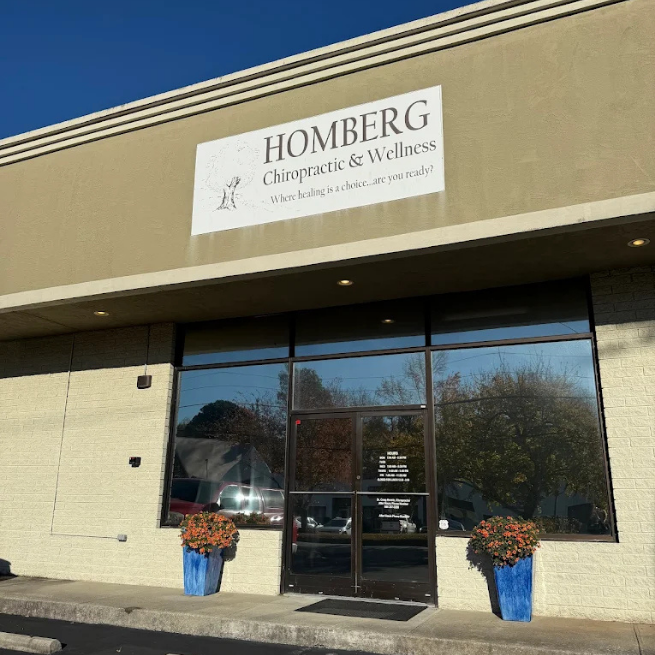

Shoulder Pain Treatment in Knoxville, TN
Shoulder pain can make reaching, lifting, sleeping, driving, and exercise difficult when the joint, rotator cuff, neck, or upper back is not working well. Homberg Chiropractic & Wellness evaluates the shoulder as part of a connected system.
Book An AppointmentContent Reviewed By: Dr. Craig A. Hennie, D.C. on August 13, 2026
Chiropractic License Number: DC0000001884 (NPI: 1467696161)
Shoulder Pain Treatment At A Glance
Shoulder pain is common because the shoulder trades stability for mobility. It needs coordinated motion from the shoulder joint, rotator cuff, shoulder blade, neck, ribs, and upper back to move well. When one part of that system is irritated or not contributing properly, pain can affect work, sleep, lifting, sports, and routine activities.
At Homberg Chiropractic & Wellness, we assess the shoulder locally while also considering the spine and surrounding structures that influence it. This matters because shoulder symptoms can come from the joint itself, soft tissue irritation, posture, nerve involvement, or restricted movement in nearby areas.
Care may include Extremity and Hypermobility Care, Chiropractic Care & Functional Rehabilitation, Dry Needling, Cold Laser Therapy, or Radial Pressure Wave (RPW) Therapy when findings support them. The goal is better motion, strength, and functional confidence.

What Is Shoulder Pain?
Shoulder pain refers to discomfort, stiffness, weakness, or reduced motion involving the shoulder joint or surrounding tissues. The shoulder includes the ball-and-socket joint, rotator cuff tendons, ligaments, muscles, shoulder blade, collarbone, and nearby nerves.
Because the shoulder has a large range of motion, it relies on precise coordination. The rotator cuff stabilizes the joint, while the shoulder blade and upper back help position the arm during lifting, reaching, pushing, and pulling.
Shoulder pain can be acute after a fall, strain, collision, or sudden lifting motion. It can also become persistent when tendons, joints, posture, weakness, or compensation patterns continue to irritate the area.
Neck and upper back involvement is important to consider. Nerve irritation or restricted spinal movement can sometimes create pain, tingling, or weakness that feels like a shoulder problem. The exact pattern matters because treatment should match the structure, movement pattern, and functional limitation involved. This gives the evaluation a practical focus from the beginning.

Common Symptoms Of Shoulder Pain
Shoulder pain can come from the shoulder joint itself, but it can also be influenced by the neck, upper back, ribs, shoulder blade, rotator cuff, and surrounding soft tissues. Because the shoulder is one of the most mobile joints in the body, it relies on coordinated movement, strength, and stability to function well.
Common causes of shoulder pain may include rotator cuff irritation, tendon strain, joint restriction, muscle imbalance, shoulder blade control problems, postural strain, repetitive overhead activity, sports injuries, lifting injuries, or old injuries that were never fully restored. Pain can also develop when the shoulder is asked to do more than the surrounding muscles and tissues can tolerate.
For some patients, shoulder pain builds gradually from daily habits like computer work, driving, carrying bags, sleeping on one side, or repeated reaching and lifting. For others, symptoms may begin after a specific injury, fall, workout, or sudden movement.
At Homberg Chiropractic & Wellness, we evaluate the shoulder as part of a connected system. This helps us understand whether the main issue is local shoulder irritation, neck-related referral, upper back restriction, soft tissue sensitivity, joint mechanics, nerve involvement, or a broader movement pattern that is placing extra stress on the area.
Shoulder Pain When Reaching
Shoulder pain while reaching can make everyday activities frustrating, especially when reaching overhead, reaching behind the back, reaching into cabinets, putting on a jacket, washing your hair, or grabbing something from the back seat of a car. This type of pain may point to irritation in the rotator cuff, shoulder joint, tendons, muscles, or the way the shoulder blade and upper back are helping the arm move.
When reaching becomes painful, many people start changing how they move without realizing it. They may hike the shoulder, twist the neck, arch the back, or avoid certain ranges of motion. Over time, these compensations can create more tightness, weakness, or irritation in surrounding areas.
At Homberg Chiropractic & Wellness, we assess how the shoulder moves during reaching patterns and whether the neck, upper back, ribs, or shoulder blade are contributing to the problem. The goal is to identify what is limiting the motion and build a care plan that supports better function.
Shoulder Pain When Lifting
Shoulder pain while lifting can happen during workouts, work tasks, household chores, carrying groceries, picking up children, or moving objects overhead. Pain may feel sharp, aching, weak, unstable, or restricted depending on which tissues are involved.
Lifting-related shoulder pain may be connected to rotator cuff irritation, tendon overload, poor shoulder blade control, joint restriction, muscle imbalance, or compensation from the neck and upper back. It can also happen when the shoulder is repeatedly loaded without enough strength, mobility, or recovery to support the demand.
If lifting causes pain, it is important to understand whether the issue is related to strength, control, joint motion, nerve irritation, or tissue sensitivity. At Homberg Chiropractic & Wellness, we review the movements that trigger your symptoms and assess how the shoulder, arm, neck, and upper back are working together.
Care may include chiropractic care, functional rehabilitation, extremity care, dry needling, cold laser therapy, radial pressure wave therapy, or other services when appropriate based on your evaluation.
Shoulder Pain While Sleeping
Shoulder pain while sleeping is common, especially for people who lie on the affected side or sleep with the arm tucked under the body, overhead, or compressed for long periods. Nighttime shoulder pain can make it harder to fall asleep, stay asleep, or wake up without stiffness.
This type of pain may be related to rotator cuff irritation, joint inflammation, muscle tension, nerve sensitivity, or limited shoulder mobility. It may also be influenced by neck position, pillow support, or upper back stiffness.
If shoulder pain is worse at night or first thing in the morning, the position of the shoulder, neck, and upper back should be considered during the evaluation. At Homberg Chiropractic & Wellness, we look at both the painful area and the surrounding structures that may be contributing to discomfort during rest.
The goal is to help reduce irritation, improve movement, and identify practical changes that may make sleeping more comfortable while the shoulder is recovering.

What Causes Shoulder Pain?
Shoulder pain can develop from tissue irritation, joint restriction, poor mechanics, injury, or repeated overload. Because the shoulder is highly mobile, even small changes in movement control can create symptoms over time.
Common mechanical causes include rotator cuff irritation, shoulder blade control problems, restricted upper back motion, neck involvement, muscle imbalance, and limited mobility in the shoulder joint.
Acute causes may include falls, lifting injuries, sports trauma, or sudden reaching motions. Persistent symptoms often involve repetitive work, overhead activity, desk posture, weakness, or old injuries that were never fully restored.
Capacity and recovery also matter. When the shoulder is asked to do more than the tissue can tolerate, pain may linger. A complete evaluation helps determine whether the main issue is strength, mobility, inflammation, nerve irritation, or coordination.

Conditions That Can Mimic Shoulder Pain
Several conditions can mimic shoulder pain. Neck nerve irritation can refer pain, tingling, numbness, or weakness into the shoulder and arm, even when the shoulder joint itself is not the main source.
Upper back and rib restrictions can also affect shoulder mechanics, making reaching or breathing feel tight near the shoulder blade. Elbow or wrist issues may change how the arm loads and create compensation higher up the chain.
Rotator cuff injuries, frozen shoulder, arthritis, bursitis, tendon irritation, and labral injuries can produce overlapping symptoms. Chest-related or cardiac symptoms can sometimes be felt near the shoulder, especially if pain is associated with shortness of breath, sweating, nausea, or chest pressure. Those symptoms require urgent medical care.
Can Shoulder Pain Come From the Neck?
Shoulder pain can sometimes come from the neck, especially when nerves, joints, muscles, or spinal movement patterns in the cervical spine are involved. This is why shoulder pain should not always be treated as an isolated shoulder problem.
Neck-related shoulder pain may feel like aching, tightness, burning, tingling, numbness, weakness, or pain that travels from the neck into the shoulder, upper back, arm, or hand. Some patients notice symptoms after sitting at a desk, looking down at a phone, driving, sleeping awkwardly, or turning the head.
When the neck is contributing to shoulder pain, treating only the shoulder may not address the full problem. The shoulder, neck, upper back, ribs, and shoulder blade all work together during movement, so restrictions or irritation in one area can affect another.
At Homberg Chiropractic & Wellness, we evaluate whether shoulder pain is coming from the shoulder itself, the neck, or a combination of both. This may include range-of-motion testing, orthopedic testing, neurological screening, posture and movement assessment, and a review of symptoms such as tingling, numbness, weakness, or pain that travels down the arm.
If your shoulder pain is connected to neck mechanics or nerve irritation, your care plan may include chiropractic care, functional rehabilitation, dry needling, soft tissue support, cold laser therapy, or other services based on your findings. If your symptoms suggest that additional medical evaluation is needed, we will explain the next appropriate step.

When To Seek Urgent Care For Shoulder Pain
Seek urgent medical care for shoulder pain if it occurs with chest pressure, shortness of breath, sweating, nausea, fainting, or pain spreading into the jaw or left arm. Also seek urgent care after major trauma, visible deformity, sudden inability to move the arm, severe swelling, fever, or signs of infection near the joint. When these signs are present, medical assessment should come before conservative chiropractic treatment so serious causes can be ruled out.
What Our Patients Are Saying


How We Diagnose Shoulder Pain
Diagnosing shoulder pain at Homberg Chiropractic & Wellness begins with identifying whether the source is local to the shoulder or influenced by the neck, upper back, ribs, or arm.
We review your symptom history, activity demands, injury history, and movements that provoke pain. Range-of-motion testing helps assess how the shoulder joint, shoulder blade, and upper back are working together.
Dr. Hennie may use orthopedic testing for rotator cuff involvement, impingement patterns, joint irritation, or instability. Neurological screening may be included when symptoms travel into the arm or include tingling, numbness, or weakness.
The exam guides whether care should focus on joint motion, soft tissue, functional rehabilitation, spine involvement, or referral for additional medical evaluation.
How Homberg Chiropractic & Wellness Treats Shoulder Pain
Shoulder pain treatment at Homberg Chiropractic & Wellness focuses on improving how the shoulder, neck, upper back, and arm function together. Care is guided by the source of irritation and the movements you need to restore. The goal is to match each service to the driver of your symptoms and the function you need to restore.

Radial Pressure Wave Therapy
RPW therapy uses acoustic energy to support healing in chronic soft tissue injuries, tendinopathies, and stubborn muscular restriction.
Learn More
Spinal Curve Rehabilitation
We use extension traction and Denneroll protocols to help restore spinal curves and support longer-lasting structural correction.
Learn More
Extremity and Hypermobility Care
We treat extremity joints, TMJ concerns, and hypermobility patterns through full kinetic chain assessment.
Learn MoreWhy Early Treatment Matters
Early treatment for shoulder pain matters because limited shoulder motion often leads to compensation in the neck, upper back, elbow, and wrist. Avoiding movement may protect the area short term, but it can also allow stiffness and weakness to build.
A timely evaluation helps identify whether symptoms are coming from the joint, soft tissue, nerve involvement, or surrounding mechanics. This supports a clearer plan before the shoulder becomes more restricted or daily activities become harder to perform.
Meet The Team

Dr. Craig Hennie, Chiropractor
Dr. Craig Hennie has served Knoxville Bearden since graduating from Cleveland Chiropractic College in 2002. His recovery from chronic post-accident headaches shaped his function-first approach. He is Zone Certified, Board Qualified for Acupuncture, a Certified Medical Examiner, and trained in whiplash rehabilitation, cold laser therapy, kinesio taping, and non-spinal disorders.
Meet the Team
Madison McGill, Office Manager and Chiropractic Therapy Assistant
Madison keeps the clinic running with the efficiency and warmth that sets the tone for every patient experience. She is a certified chiropractic therapy assistant with more than four years in the chiropractic field.
Meet the Team
Salem Plaag, Chiropractic Therapy Assistant
Salem brings experience and attention to detail to every patient interaction as a certified chiropractic therapy assistant.
Meet the TeamServing Knoxville And Nearby Communities
Homberg Chiropractic & Wellness serves patients from Knoxville, Bearden, Sequoyah Hills, West Knoxville, areas near downtown Knoxville, and the University of Tennessee community. Our location and care model are built for patients who want a thorough evaluation, clear recommendations, and function-focused chiropractic care.
Frequently Asked Questions
Sources And Clinical References
Mayo Clinic: Rotator Cuff Injury. Supports: rotator-cuff symptoms, overuse mechanisms, and shoulder functional limitations.
NCBI Bookshelf: Cervical Radiculopathy. Supports: neck-related nerve symptoms that can mimic or contribute to shoulder and arm pain.
PubMed: Trigger Point Dry Needling For Musculoskeletal Conditions. Supports: dry needling as a short-term adjunct for selected muscle-related pain presentations.
PubMed: Shock-Wave Therapy For Tendinopathies. Supports: RPW/shockwave evidence limits for selected chronic tendon or soft-tissue presentations.
Book Shoulder Pain Treatment In Knoxville
Shoulder pain treatment in Knoxville should identify whether the symptoms are coming from the shoulder, neck, upper back, soft tissue, or a broader movement pattern. Homberg Chiropractic & Wellness evaluates the full system before building a plan. If shoulder pain is limiting sleep, lifting, reaching, work, or exercise, book an appointment. After your evaluation, we will explain the findings and the recommended next step.
Content Reviewed By: Dr. Craig A. Hennie, D.C. on August 13, 2026
Chiropractic License Number: DC0000001884 (NPI: 1467696161)